CIO / VP of IT
A network that is ruled out early in outage calls, with one accountable partner from design through operations.
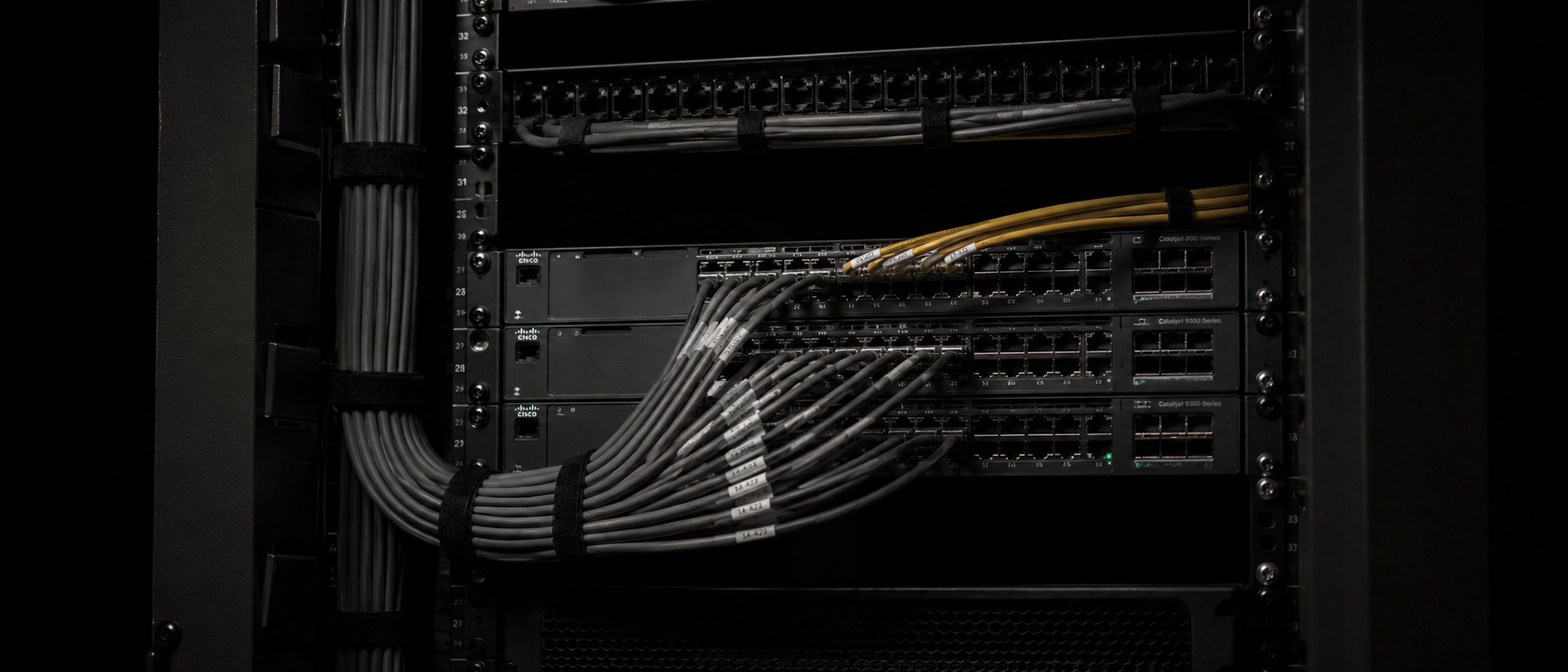
Most network outages we have investigated started at a seam: an undocumented uplink, an unmanaged closet switch, a support renewal left off the co-term. ModernOps designs campus and data center networks for segmentation and supportability, and documents them.
A network that is ruled out early in outage calls, with one accountable partner from design through operations.
A resilient target architecture, a controlled refresh path, and support renewals consolidated into a single negotiated event.
Port counts, failure domains, fabric and wireless standards worked out in the design, delivered with configurations archived and topology documented.
Monitored health, ticketed changes, documented escalation and a takeover path for the gear with no install record.
Mid-market sites rarely need a dedicated aggregation layer. Collapsing core and distribution cuts hardware, licensing and failure domains when the port counts allow it, so we work through the port counts first.
Meraki-style operations versus Catalyst-class capability is an operating-model decision. Who will watch the dashboard matters more than the datasheet.
The environments we take over usually carry a drawer of misaligned support contracts across OEM and third-party maintenance. Co-terming them into one event recovers budget and turns renewal season into a negotiation.
VLAN and policy design reduces lateral-movement risk at a fraction of the cost of a new security tool, and it has to be built into the switching design from the start.
Configurations archived, topology mapped, failover behavior written down. A network that lives in one engineer's memory has a single point of failure that leaves when they do.
Stacked Catalyst-class core pairs with lightweight access switching across closets: fewer boxes, fewer licenses, cleaner failure domains. This is our standard mid-market pattern.
Nexus-class leaf-spine and high-density 25 and 100 GbE designs for virtualization and storage traffic, sized for the east-west traffic that dominates modern data centers.
Dedicated SAN fabric or converged 25 GbE for array traffic, designed with the storage practice because the array is only as fast as the path to it.
Repeatable site kits: switching, access points and configuration templates that turn the next office into a shipment. Includes wireless assessments and surveys for warehouses and difficult RF environments before anyone buys an access point.
Networks built by others, brought under management: configuration archives, topology mapping, monitoring onboarding and a findings list, so the environment is documented before anyone changes it.
Support contracts co-termed across OEM and third-party maintenance, structured to give you bargaining power at renewal time and mapped against the hardware lifecycle.

The deepest practice on this page: Catalyst campus and collapsed cores, Nexus data center fabric, MDS storage networking, Meraki cloud-managed sites and wireless across all of it, specified, deployed and supported in production. Plus Umbrella and Duo through the security practice.

Campus switching and access points deployed at branch scale, the strongest alternative pattern where Aruba operations fit the team.

Security-integrated networking: segmentation gateways and campus edge designed jointly with the switching architecture. Deep firewall, ZTNA and identity content lives on the Security & Identity page.

FortiGate as the branch and campus edge where price-performance decides, including SD-WAN patterns, designed with the same segmentation intent. Full security depth on the Security & Identity page.
Arista, Juniper, Brocade, Riverbed, and Cloudflare for DDoS protection, authoritative DNS and the internet edge.
| Dimension | The old model | ModernOps |
|---|---|---|
| Design | Boxes replaced like-for-like at refresh time | Port counts, failure domains and segmentation designed before the bill of materials exists |
| Capacity | Sized by what was there before | Sized by measured traffic, east-west patterns and storage and virtualization demand |
| Operations | Undocumented configs and an unmanaged closet switch | Configurations archived, topology documented, health monitored, changes ticketed |
| Renewals | A drawer of misaligned contracts on autopilot | Co-termed across OEM and third-party maintenance, negotiated as one event |
| Multi-site | Every location is a bespoke project | Repeatable site kits with templates, staged and shipped |
| Segmentation | A firewall at the edge and a flat network behind it | VLAN and policy design built into the switching with the security practice |
| Accountability | Reseller ships it, integrator leaves, your team inherits it | One team designs, sources, deploys, documents and can operate under 24/7 NOC |
| Phase | What happens | What you hold at the end |
|---|---|---|
| Assess and baseline · Days 0 to 10 | Discover the estate: inventory, configuration archives, topology mapping, lifecycle and support status, renewal inventory, utilization and wireless coverage where in scope. | A documented current state, a risk and lifecycle findings list, and a renewal map with co-term opportunities. |
| Design and quote · Days 10 to 24 | Produce the target architecture and standards: core and access design, fabric, wireless, segmentation intent. Register and price the bill of materials, sequence around lead times, land quick wins like monitoring onboarding. | A defensible design, a priced bill of materials, and visibility into the network you already own. |
| Validate and roadmap · Days 24 to 30 | Validate the plan against change windows and dependencies, finalize the phased rollout, deliver documentation and the cutover approach. | An executable refresh roadmap with documented rollback thinking, ready for procurement and scheduling. |
Thirty days delivers the baseline, the design and the plan. Hardware lead times and multi-site rollouts then run in phases on their own schedule, which is how a forty-closet refresh happens without a forty-closet outage.
This page is the assess, design, procure and deploy motion. Managed Network and the 24/7 NOC carry the daily discipline: monitoring, alert triage, ticketed changes and escalation, on networks we built or networks we inherited. Observability adds the visibility layer across all of it.
Stacked core pairs plus lightweight access became our standard mid-market design after several years of running it in production: fewer failure domains, fewer licenses, and faster troubleshooting at 2 a.m.
Multi-location rollouts shipped as repeatable packages: switching, wireless and templates staged per site, deployed in waves across states without flying an engineer to every closet.
Co-terming support across OEM and third-party maintenance is a standing service here, converting a drawer of surprise invoices into one negotiated event.
Topology, closets, renewals: whatever you have. We will baseline it and price the refresh.